

Root Canal vs. Dental Implant: How to Know Which Option Is Best for You
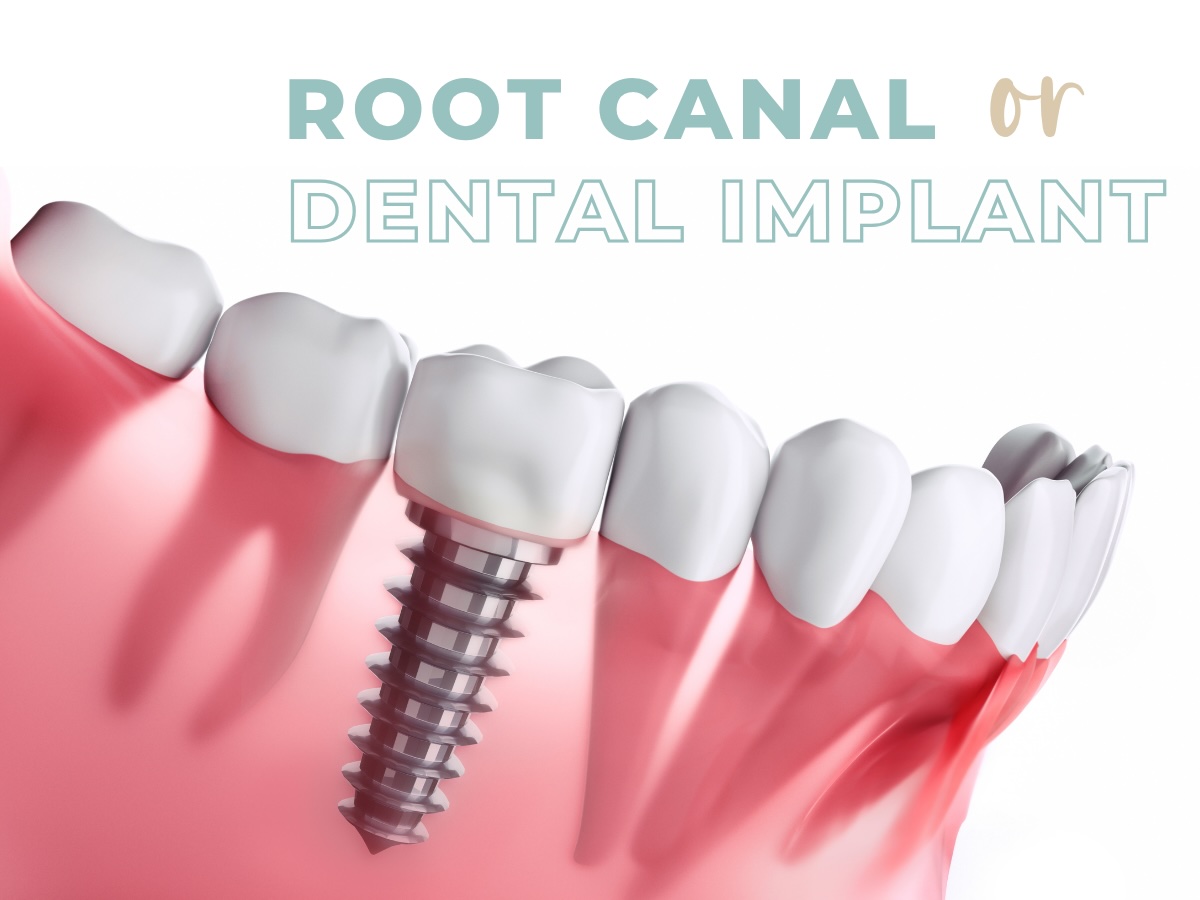 When a tooth is badly damaged, you may find yourself wondering whether you can keep it. Maybe you’ve heard that you’re going to need a root canal. Or perhaps you’re hearing that the tooth needs to come out and be replaced with a dental implant. It’s a lot to take in, especially when you’re already dealing with pain or another uncomfortable symptom.
You don’t have to decide based on the treatment name alone. It depends on what’s actually happening with the tooth. If there’s enough healthy tooth structure remaining, a root canal may give you a way to save it. And saving your natural tooth, if possible, is preferred by endodontists — there’s no replacement for natural chewing function and appearance. However, if the damage is too extensive, an implant may be needed to replace it.
When Can a Root Canal Save a Tooth?
A root canal is used when the problem is inside the tooth, but the tooth itself can still be restored. Endodontists take out inflamed or infected pulp, then clean the inner part of the tooth and seal up the canals. Your dentist or endodontist can then restore the tooth.
This means you get to keep your natural tooth instead of having it removed. For many patients, that’s an important part of the decision. A root canal may be an option if:
- There’s enough healthy tooth structure left
- The pulp has become infected or inflamed
- The tooth is still adequately supported
- There isn’t a fracture that makes restoration impossible
After treatment, the tooth still needs to be protected. Depending on the tooth and how much structure remains, your endodontist may recommend a crown. You’ll also want to continue your regular brushing, flossing, and dental visits.
When Is a Dental Implant Needed?
Sometimes, there’s simply too much damage in the tooth to work with. Extensive decay can leave very little healthy tooth behind. A serious fracture can cause the same problem, especially when the crack extends below the gumline.
In these cases, trying to restore the tooth may not work. The tooth may need to be removed instead, and a dental implant can replace it. An implant may be appropriate when:
- The tooth can’t be restored
- A fracture extends below the gumline
- Extensive decay has destroyed too much of the tooth
- The tooth is already missing
An implant replaces the missing tooth rather than treating the original one. The implant is placed in the jawbone, where it needs time to heal before the final crown is attached.
Root Canal vs. Dental Implant: What About Cost and Treatment Time?
Cost is usually one of the first things patients want to discuss. That’s understandable, but there’s no single price for either treatment. What you’ll pay depends on the condition of your tooth and what your treatment involves. A root canal may be followed by a crown or another restoration. An implant can involve several steps, from removing the tooth, waiting for it to heal, placing the implant, to placing the final crown. And patients with low bone density may also need a bone graft before getting any implants.
The timeline isn’t the same, either. A root canal may take one or more appointments, followed by the restoration. An implant generally takes longer because the implant needs time to heal in the jaw before the final crown is ready. So while cost and timing are reasonable questions, they aren’t the first things to figure out. First, you need to know whether the tooth can be saved.
Can Your Natural Tooth Still Be Saved?
You may be able to tell that something is wrong with your tooth, but you can’t always tell how much damage has occurred. A tooth can be painful and still be treatable. Other teeth can have significant damage without causing much discomfort.
At Largo Endodontics, we use operating microscopes and 3D CBCT imaging to take a closer look at damaged and infected teeth. This gives us a better view of the tooth and surrounding structures when we’re trying to determine whether it can be saved. If there’s enough healthy structure, a root canal may be able to preserve the tooth. If the damage is too extensive, we’ll explain why removing it and replacing it may be necessary.
Largo Endodontics: Helping You Protect Your Natural Smile
If you’ve been told that you need an extraction, you may want to find out whether the tooth can be saved before moving forward. An evaluation can give you a much better idea of what’s happening than symptoms alone. At Largo Endodontics, we’ll examine the tooth, explain what we find, and talk with you about the treatment options that make sense for your situation.
Ready to find out what’s possible? Contact Largo Endodontics today to schedule an evaluation.
Comments are closed.