

Why Your Endodontist Needs a 3D CBCT Scan (And Why 2D X-Rays Aren’t Enough)
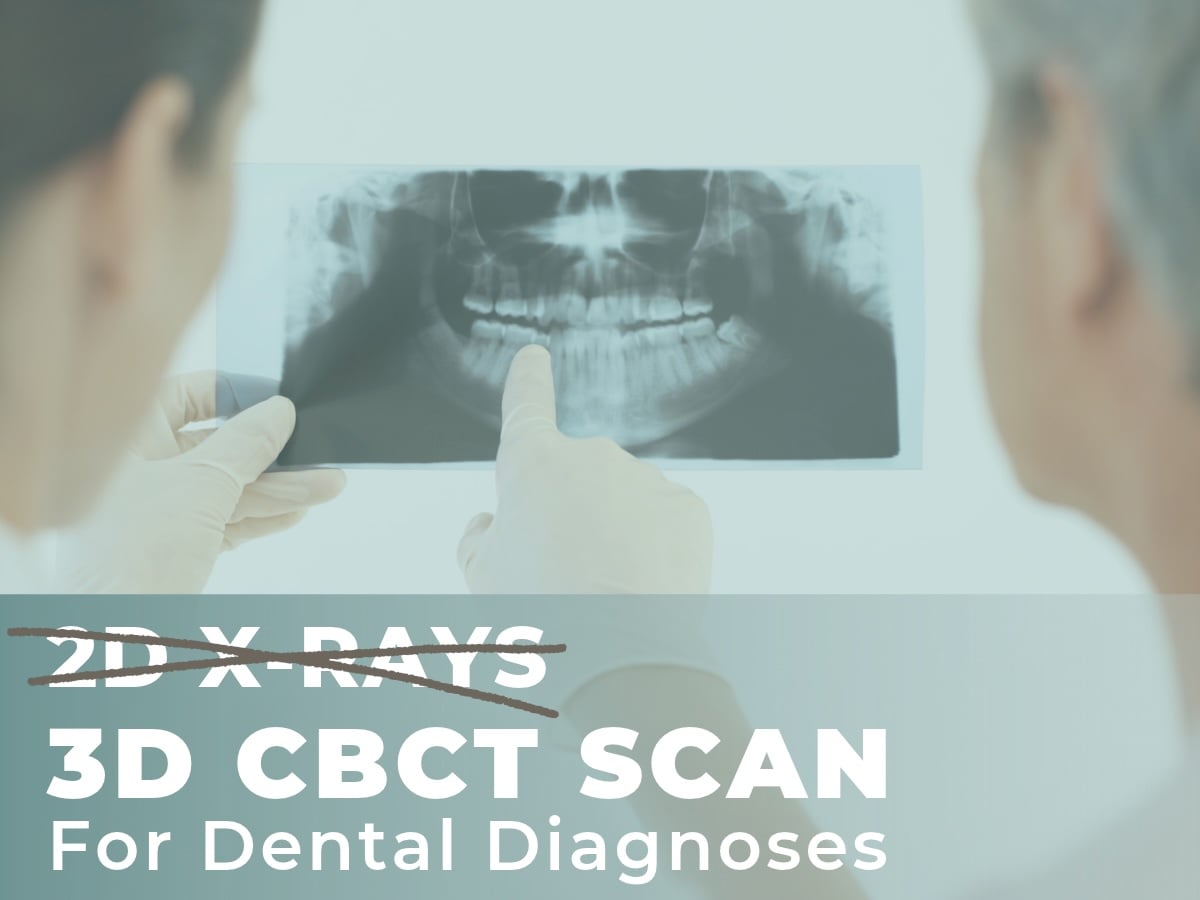 Dental X-rays have been used for many years to help dentists find problems that aren’t visible during a regular dental exam. They’re still an important part of dental care and, in many cases, a regular X-ray provides the information a dentist needs.
There are times when it doesn’t, though. A traditional X-ray gives you a flat, two-dimensional view, while a tooth has roots and canals that extend in different directions. If you’re having tooth pain or need a root canal, your endodontist may need to see more than that one view can show.
Traditional X-Rays Have Their Limits
One of the problems with a 2D X-ray is that different parts of the tooth can overlap in the image. A root can sit behind another root, for example, or a small canal may be difficult to see.
That can make a difference with root canal treatment. Teeth don’t all have the same anatomy, and some have extra canals or unusually shaped roots. Small fractures can be difficult to spot on a regular X-ray, too. The same is true of some early changes in the bone around a tooth.
That’s a frustrating experience when you have tooth pain and an X-ray doesn’t really show a reason for it. It doesn’t mean it’s fine. The problem may just be somewhere that a 2D image can’t show well.
What Do CBCT Scans Reveal?
CBCT (or cone beam computed tomography) is a kind of dental imaging that creates a 3D image instead of a flat X-ray. Your endodontist can look at the tooth from different angles and examine individual sections of the image.
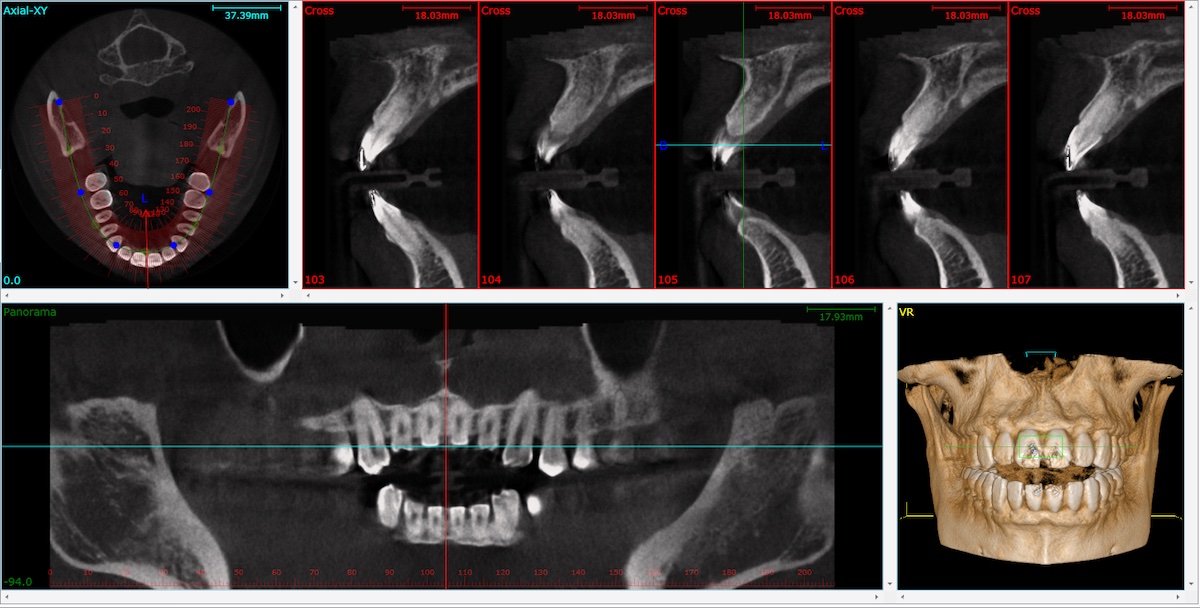
That can be helpful when a 3D dental scan for a root canal is needed. The image may show an extra canal, the shape and position of the roots, or changes in the bone around the tooth. It may also show root resorption or even a fracture that wasn’t visible on a regular X-ray.
A CBCT scan can be useful for a tooth that has already had a root canal as well. If the tooth continues to cause problems after treatment, the scan may help your endodontist find something that wasn’t apparent before.
When Tooth Pain Doesn’t Have an Obvious Cause
Sometimes you have tooth pain, but a regular X-ray doesn’t give you a good explanation for it. You may notice pain when you bite down or have discomfort that keeps coming back. You may even have been told that everything looks fine.
This is one situation where a CBCT scan tooth pain evaluation may be helpful. The 3D image gives your endodontist another way to look at the tooth and the bone around it. It may reveal changes that are difficult to see when everything is superimposed in a 2D image.
A CBCT scan isn’t necessary for everyone with tooth pain. Your endodontist will consider your symptoms, dental exam and existing X-rays before deciding whether the additional imaging is needed.
Planning Your Treatment With More Information
A 3D image can also be useful when your endodontist is planning treatment. If a tooth has an extra canal or an unusual root shape, it’s helpful to know that before starting a root canal rather than discovering it during the procedure.
This can be particularly important with complicated root canals, retreatment and endodontic surgery. Having a better idea of the tooth’s anatomy beforehand may help the procedure take less time and gives your endodontist more information to work with while treating the tooth.
CBCT is designed for dental imaging and focuses on the area being examined. It generally exposes patients to less radiation than a conventional medical CT scan. Your endodontist will still recommend a CBCT only when the information it provides is useful for your care.
Largo Endodontics Uses 3D Imaging for Diagnosis
Dental imaging continues to change. Dental MRI is one technology being developed for dental care, but CBCT is already available and being used by endodontists today.
Here at Largo Endodontics, Dr. Ernest Rillman uses CBCT imaging in the office when he needs a closer look at a tooth. The additional information can be helpful when a traditional X-ray doesn’t give us enough information to understand what’s going on.
If you’ve been dealing with tooth pain or have been told you may need a root canal, we can help determine what’s causing the problem. Contact Largo Endodontics to schedule a visit.
Comments are closed.