

Is Cracked Tooth Syndrome Causing Your Mystery Tooth Pain?
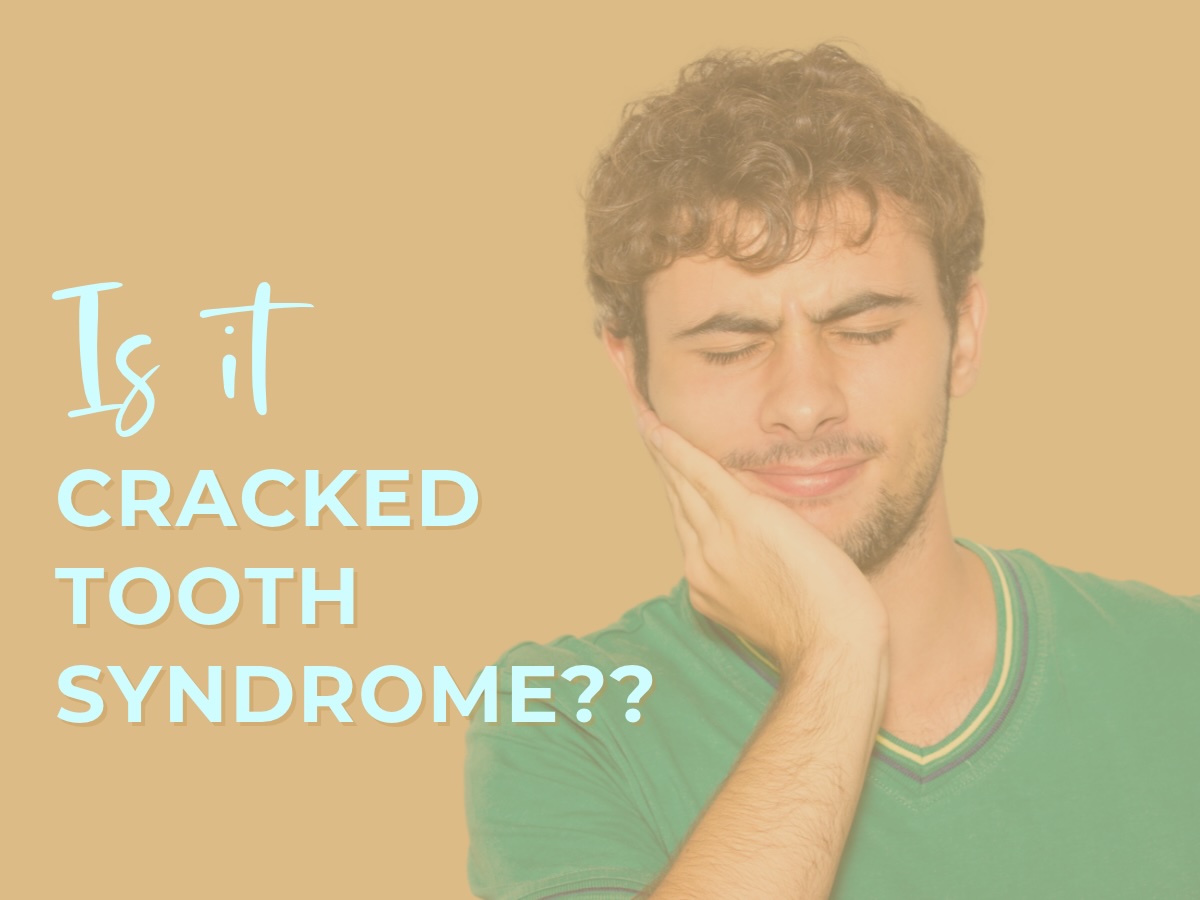 One question we hear from patients with unexplained tooth pain is why a tooth can hurt when they bite down and then feel completely normal a moment later. Are you dealing with a sharp pain that seems to come and go, even though your dentist hasn’t found anything wrong? Here’s what you need to know.
What Is Cracked Tooth Syndrome?
Cracked tooth syndrome (CTS) occurs when a tooth develops a small crack that causes pain or sensitivity. These cracks are often very small and can be difficult to see during a routine dental examination.
Unlike a tooth broken by an accident, cracked tooth syndrome tends to develop over time. Years of chewing and grinding or clenching can put stress on a tooth and eventually lead to a hairline fracture. Biting into hard objects (for example, hard candy or ice) may also contribute. Dental trauma can cause a cracked tooth, but it isn’t necessary for CTS to develop.
A few of the more common symptoms are:
- Discomfort when you bite down
- Pain when you release a bite
- Higher sensitivity to cold or hot (e.g. ice cream, coffee)
- Pain that happens on and off
You might also not know exactly which tooth is causing discomfort. Sometimes, you simply know that something hurts on one side of your mouth.
Why Does a Cracked Tooth Hurt?
A cracked tooth doesn’t always cause constant pain. In fact, the intermittent nature of the symptoms is one reason patients can have trouble getting a diagnosis. When you chew, pressure can cause the cracked portion of the tooth to flex. This can irritate the pulp inside the tooth, where the nerves and blood vessels are located.
You may feel a sudden, sharp sensation when you bite down. But once you stop chewing, the pressure’s gone, and the pain may disappear. This is why some patients experience pain when biting down then it goes away. You might have no trouble eating soft foods but feel a quick jolt when you bite into something crunchy or hard.
As the crack becomes more extensive, you may develop other symptoms. These can include:
- Pain when you release your bite
- Increased sensitivity to hot or cold
- Pain that lingers after eating
If you notice a pattern, let your dentist or endodontist know what triggers the pain. These details can be helpful during your evaluation.
Can an X-Ray Miss a Cracked Tooth?
Yes. A standard dental X-ray is useful for many dental problems, but a very small crack may not appear on a traditional two-dimensional image. A crack in a tooth not showing on an X-ray does not necessarily mean the tooth is healthy. When a tooth continues to hurt despite a normal X-ray, an endodontist can perform additional testing to look for the source of the pain.
How Is Cracked Tooth Syndrome Diagnosed?
Diagnosing a cracked tooth may require a closer examination than a routine dental visit. Specific factors (like your symptoms, dental history, response to different tests) all provide useful information. Magnification can also be important. An operating microscope allows an endodontist to examine the tooth at a much higher level of detail. Transillumination, which uses light to look through the tooth, may also help identify a crack.
3D CBCT imaging provides another view of the tooth and surrounding structures. While no imaging method can identify every microscopic crack, CBCT can provide information that isn’t available from a traditional two-dimensional X-ray.
An evaluation may include:
- Bite and temperature testing
- Examination with an operating microscope
- Transillumination
- 3D CBCT imaging when appropriate
These tools can help determine what is causing your pain and whether the tooth can be treated.
Can a Cracked Tooth Be Saved?
A cracked tooth doesn’t always mean you’ll lose the tooth. It depends on where it is and how deep or large it is, along with whether the pulp has been affected. You might need a root canal if the pulp has an infection or inflammation. A crown may also be recommended to protect the tooth from additional chewing pressure.
It’s important not to ignore recurring pain. A crack can continue to spread as the tooth is used. If it extends into the root or below the gum line, treatment becomes much more difficult and the tooth may no longer be saveable.
Largo Endodontics: A Closer Look at Difficult-to-Diagnose Tooth Pain
At Largo Endodontics, Dr. Rillman uses high-magnification operating microscopes and 3D CBCT imaging when appropriate to evaluate tooth pain that hasn’t been explained by a routine examination. If you have recurring pain when biting down, especially if the pain disappears before you can show someone exactly where it hurts, don’t assume it will go away. An endodontic evaluation can help determine what is causing the problem.
Ready to have your tooth pain evaluated? Contact Largo Endodontics to schedule a visit and get a closer look at what’s happening before a small crack becomes a more serious fracture.
Comments are closed.